






Embracing Ceremony as a Path to Reconciliation
Over the past year, Living Sky School Division (LSKYSD) has taken meaningful steps toward reconciliation by bringing traditional pipe ceremonies into its schools, marking each season with intention, respect, and learning. Held across multiple school communities, these ceremonies have created opportunities for students, staff, and leadership to engage in Indigenous cultural practices in a manner that is guided, authentic, and deeply rooted in tradition.
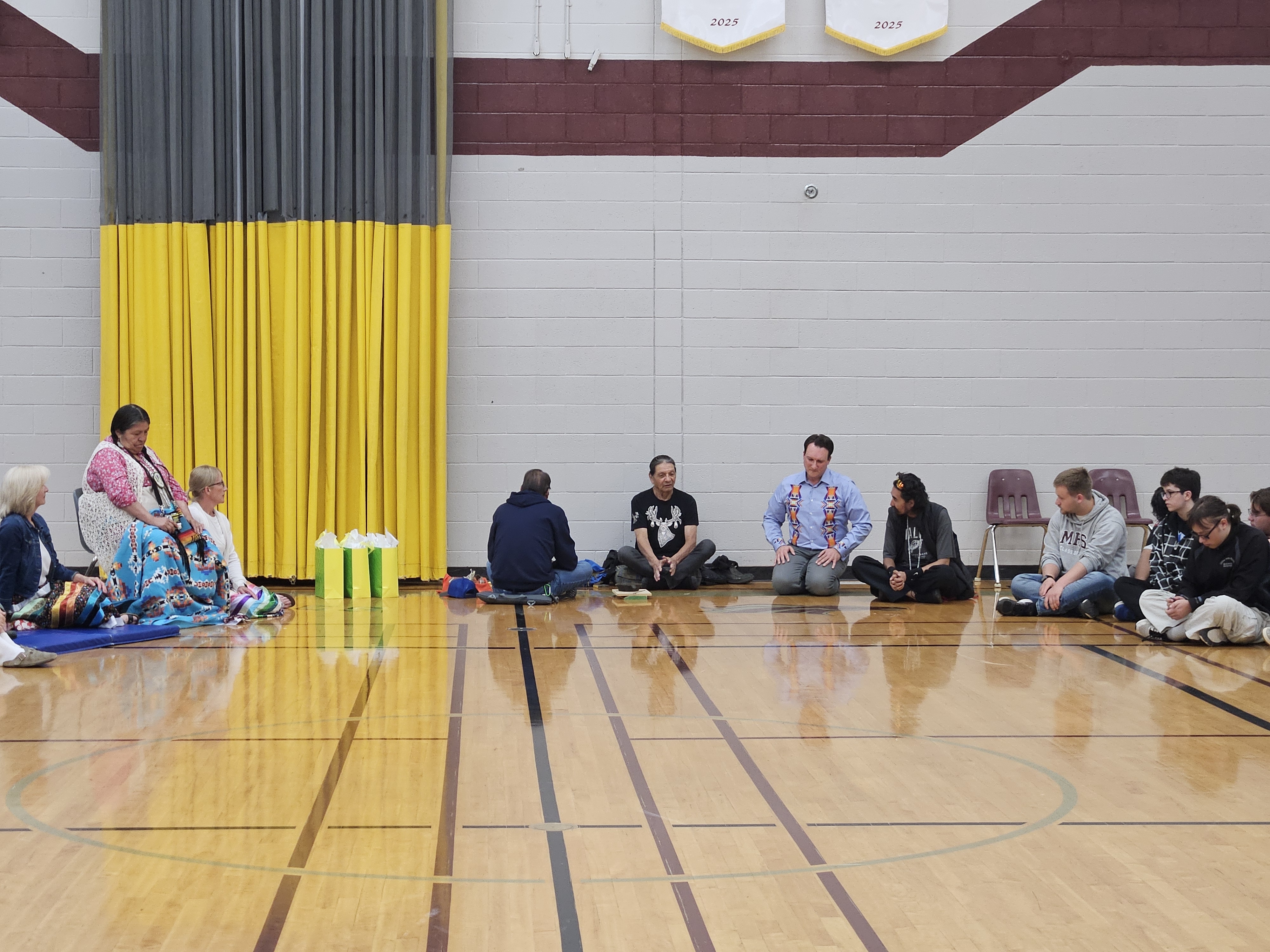
Each ceremony was led by elders (keteyak), including a pipe carrier, head woman and a helper (oskâpêwis) who collectively have over one hundred years of learning, teaching and holding ceremony. Together, they offer prayers for the division as a whole and for the learning and safety of all our students. Elders guide participants through teachings connected to the land, the seasons, and the responsibilities people carry within community.
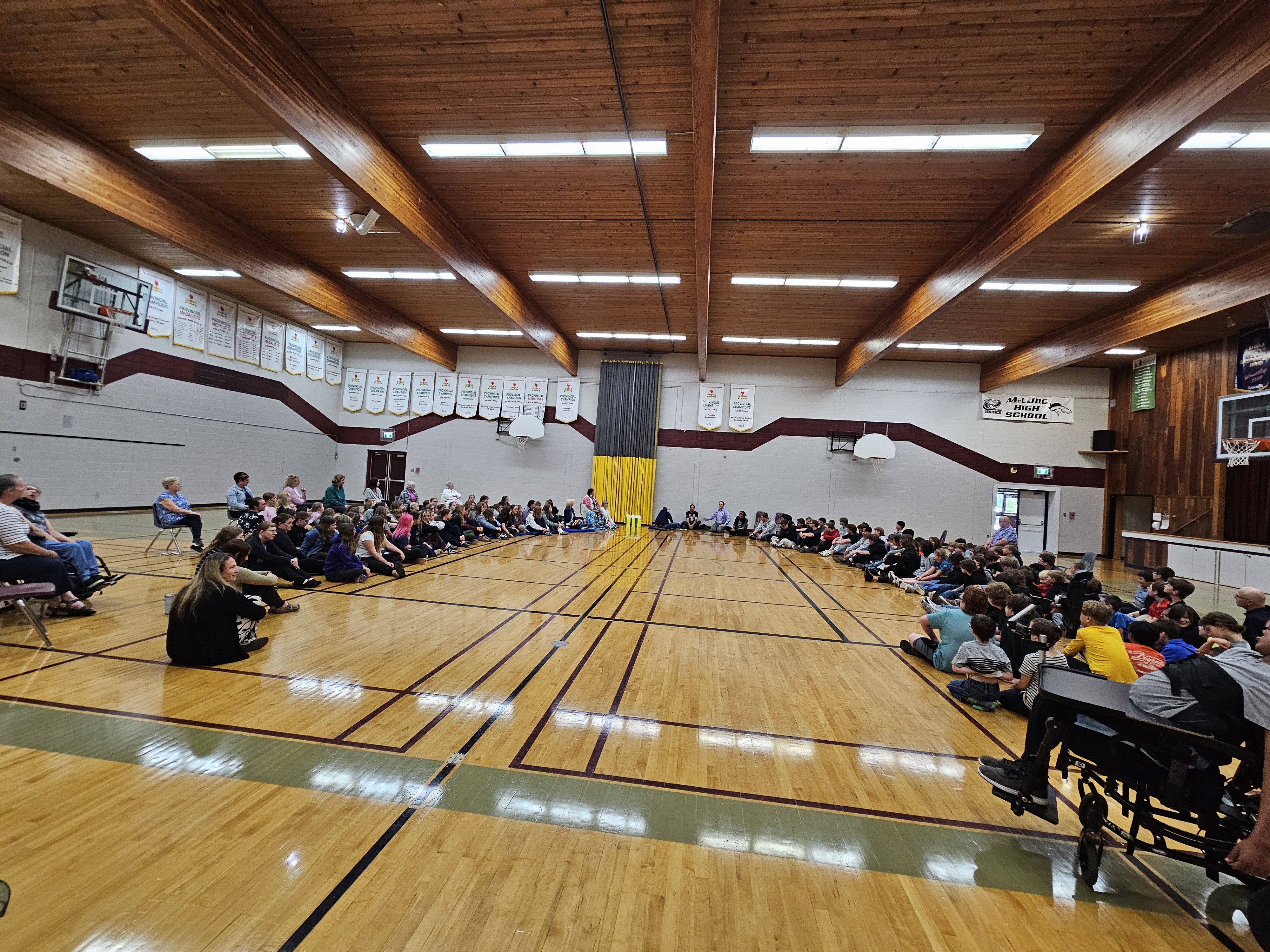
Ceremonies were held at Cut Knife Community School (Fall), Hafford Central School (Winter), Medstead Central School (Spring) and McLurg High School (Summer). Board Trustees from the respective subdivisions also attended each of the pipe ceremonies, demonstrating leadership and a clear commitment to reconciliation at the governance level. Their presence signals that this work is not symbolic, but rather a shared responsibility that extends from classrooms to decision-making tables.
Holding ceremonies in public schools is a powerful act. For generations, Indigenous peoples were denied the right to practice their cultural traditions, often within education systems themselves. By welcoming ceremony back into these spaces, LSKYSD hopes to actively contribute to healing and restoring what was once suppressed. The division affirms the value of Indigenous knowledge systems and reinforce that schools are places where diverse ways of knowing, being, and doing are respected and celebrated.
For students, witnessing and participating in ceremony encourages understanding, empathy, and respect. Indigenous students see their identities reflected and honoured in their learning environments. Non-Indigenous students gain meaningful exposure that moves beyond textbooks, building relationships and awareness that are foundational to reconciliation. Each are building blocks to creating educational environments where everyone feels they belong.
As each season passes, these ceremonies continue to root school communities in a shared commitment: to listen, to learn, and to walk forward together in a good way.